
Alusine Mansaray: Sierra Leone Telegraph: 15 September 2026:
A few days ago, I watched a video of Sierra Leone’s government Chief Minister – Dr. David Moinina Sengeh, in a meeting with the Minister of Social Welfare, Mrs. Melrose Karminty, where he gave instructions for the establishment of a care home for the aged.
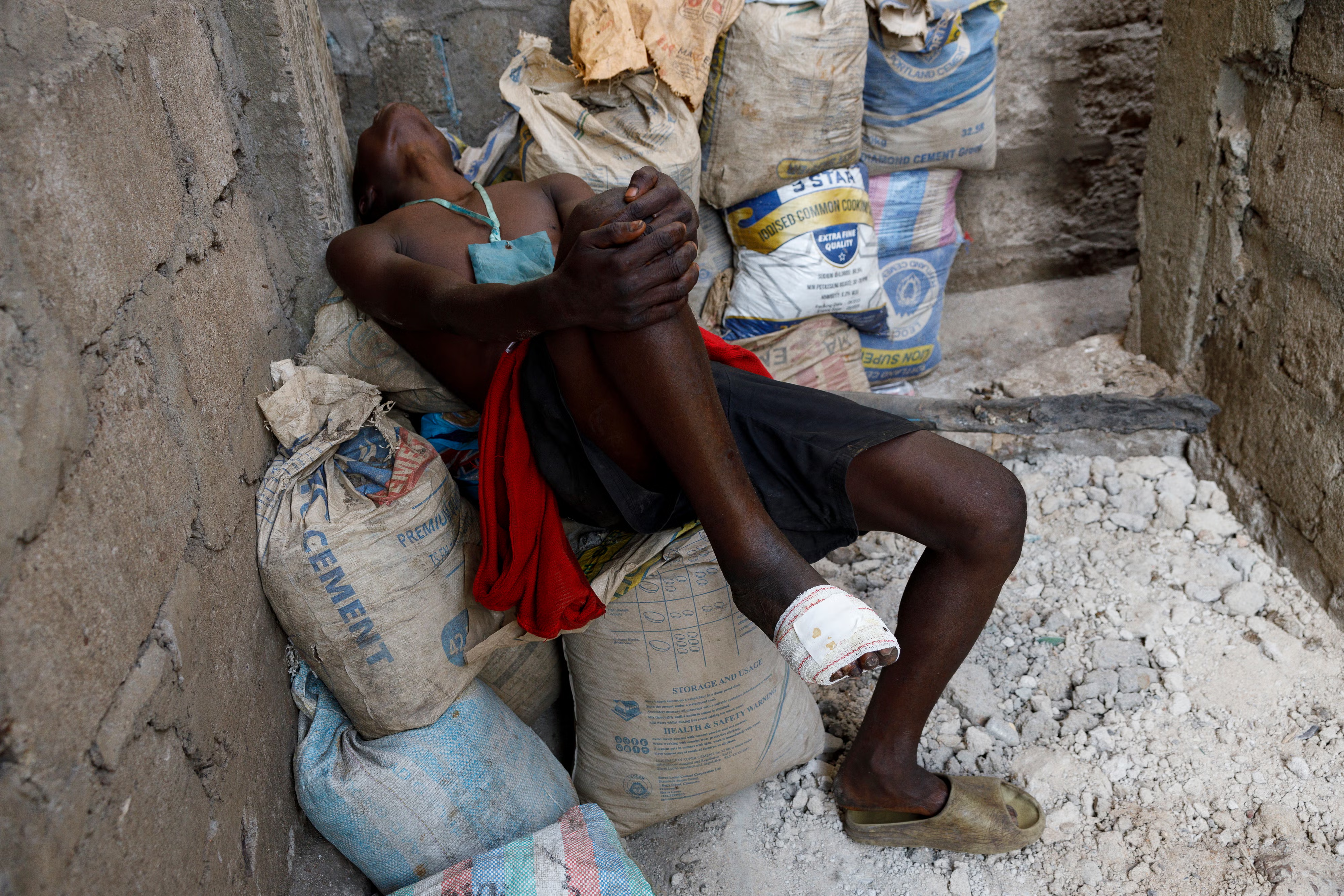
The initiative is certainly commendable. Our elderly deserve dignity, care and protection after spending much of their lives contributing to their families and communities. But as I watched, one question kept troubling me: what about the young people who are scattered across the streets of Freetown, particularly those whose lives have been ravaged by drug abuse, homelessness and hopelessness?
What about the young men and women we see around markets, streets, parks, and the bay areas, many of whom appear to have no stable home, no meaningful source of income, and no clear path back into society? Have we become so accustomed to seeing them that their condition no longer shocks us?
The crisis is bigger than the visible presence of young people on the streets. Kush, tramadol, and other forms of substance abuse have exposed a much deeper social problem. Behind addiction are unemployment, poverty, broken family structures, peer pressure, trauma, neglect, and the absence of effective rehabilitation and reintegration systems.
A young person who has fallen into addiction should not be treated simply as a nuisance to be removed from public spaces. There is a human being behind the addiction, and in many cases there is a family, a story, a talent and a future that have been buried beneath circumstances.
The government itself has recognized the seriousness of drug abuse. President Bio recently called for a comprehensive response involving prevention, treatment, rehabilitation, reintegration, skills development and employment support. The question, therefore, is not whether the problem exists. The question is whether we are doing enough about it.
If government can make deliberate plans to expand care for the elderly, why can we not demonstrate the same urgency in creating properly managed temporary shelters and rehabilitation centres for vulnerable young people?
Why can there not be a coordinated national programme to identify those living on the streets, provide them with safe accommodation, medical and psychosocial support, rehabilitate those struggling with substance abuse, reconnect them with their families where possible, and equip them with practical skills for economic reintegration?
These centres should not become dumping grounds. They should be places of recovery, discipline, learning and transformation. A young man could enter with an addiction and leave with a skill.
A young woman could enter without hope and leave with a livelihood. Someone who once slept under a bridge could eventually become a mechanic, farmer, tailor, electrician, entrepreneur, or technician. That is what meaningful social protection should look like.
We must also be careful about turning every social intervention into a political spectacle. Government has a responsibility to show results, not simply to announce intentions. Our young people need more than speeches, slogans and temporary gestures. They need institutions that can meet them where they are and walk with them until they can stand on their own feet.
The President’s own Human Capital Development agenda speaks of protecting vulnerable populations and reintegrating displaced youth into social protection systems. If these commitments are to mean anything, they must reach the young people who are most difficult to reach and most vulnerable to being forgotten.
So, my question to the Chief Minister, the Ministry of Social Welfare, and the wider government is simple: when will we begin treating the crisis on our streets with the same seriousness with which we treat other national priorities? We should not have to choose between caring for the elderly and rescuing vulnerable young people.
Sierra Leone needs both. Our elderly deserve a dignified place to spend their later years, but our young people deserve a genuine opportunity to have a future.
We cannot build a prosperous Sierra Leone while an entire generation is allowed to disappear into addiction, homelessness, and despair. The measure of a government is not only how it treats those who are already safe; it is also how seriously it fights to rescue those who are falling through the cracks.
Be the first to comment