Abdulai Mansaray: Sierra Leone Telegraph: 28 July 2025:
Sierra Leone established the Environment Protection Act (EPA) in 2008, and among many others, it is meant to safeguard the environment and manage the nation’s natural resources. Embedded in this Act is the Agency’s remit to ensure that the nation’s vison to prevent pollution and establish a legacy for future generations is accomplished.
The functions of the EPA therefore include but not limited to National Environmental Enforcement, Licencing, Waste Management and Chemicals in the Environment, Climate Sciences and Climate change, Environmental Monitoring and Assessment. It also takes into account Environmental Research, Development and Radiological protection. The list can be exhaustive.
In Sierra Leone, we know that most of our environmental issues though natural, are partly related to human activities. These include deforestation, overfishing, water pollution, improper waste management and soil degradation to name nut a few.
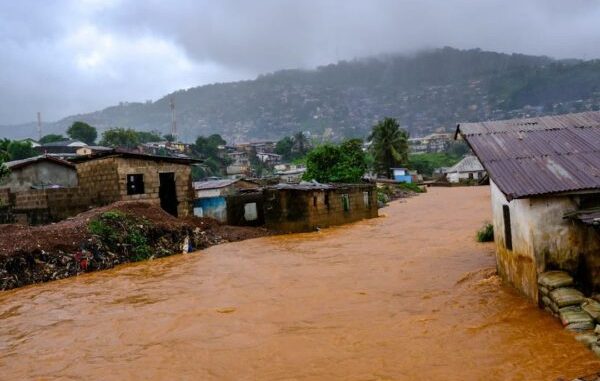
Sierra Leone, like many regions around the world and especially the tropical side of the hemispheres is experiencing the raining or monsoon season. This marks the annual deluge and the regrettably associated catastrophes of mudslides, flooding, mass erosions and general changes to our landscape. It is now becoming an annual ritual of tragedies, as if a rite of passage. This is especially in our capital city Freetown, where everything and anything that the EPA is supposed to promote is at risk.
For example, the number of buildings that have reportedly collapsed in Freetown this year is scary. Notwithstanding the natural circumstances, it is easy to see how nature itself is taking revenge for our man -made contributions.
It is now a common sight of officials in high viz jackets visiting the sites following the aftermath of these tragedies. It as if they are trying to close the barn doors after the horses have bolted. Are these tragedies thoroughly investigated? If so, are the findings published for public consumption. Are there any lessons learnt, to inform policies going forward? If so, why do we still get repeat performances year in year out? Are we just complacent to bury our dead and move on with the usual “how-for -do?” fatalistic attitude?
The rains in Freetown recently left a trail of casualties and tragedies. The numbers are yet to be verified at the time of writing. Nevertheless, one life lost is always one life too many.
Let us accept that most of the environmental issues and especially the seasonal deluge that characterise the rainy season are to a large extent a natural phenomenon. However, should Sierra Leoneans be shareholders in this devastation that seems to afflict especially our capital city year in year out?
We know that climate change is real despite what Donald Trump and his 1% bourgeoisie say. Sierra Leone, a tiny speck in the grand scheme of things is not in a position to fully change that their perception, misconception or otherwise. But is there something that we can do as a country and as a people to reduce the annual risks we face during the rainy season?
When Pedro de Cintra, the Portuguese explorer visited our country in 1462, upon approaching from the sea, he is reported to have called the land “Serra Lyoa”, meaning Lion Mountains in Portuguese.
Legend has it that Pedro de Cintra was greeted by the sound of thunderclaps and lightning, against a backdrop of a landscape that looked like a crouching lion. How picturesque. Van Gogh would have been fascinated. Although he was erroneously credited with “discovering Sierra Leone”, you wonder how someone can discover something that was already here? Thanks to misguided sense of imperial superiority.
If Pedro Da Cintra, who allegedly gave the name Sierra Loya was to make the same journey today, or if his great grandchildren were to retrace their great grandfather’s footsteps today, it would require a monumental leap of faith to convince them that this is the same “Serra Lyoa” of 1462.
Of course, it is obviously natural that changes would take place since 1462. Sadly, such changes have been one of the human bastardisation of the greenery that was supposed to provide cover and insurance against the wild side of nature.
Those lush green spectacles that provided the tropical background are long gone. Just to emphasise the point, we still have the scars of the mudslide of August 14, 2017, to show for it. Perhaps, one of the areas we could look at is how we acquire our lands, how we manage them to protect ourselves as a nation.
No one needs a reminder of the recent collapses of buildings in the city. At face value, they suggest regulatory inadequacies or ineffectiveness. So, as part of the 2008 Act, where does the EPA’s role “to ensure that the nation’s vison to prevent pollution and establish a legacy for future” sit in this conundrum?
With the rapid growth in urbanization, one would wonder whose responsibility it is to ensure the proper monitoring of buildings. The demand for housing is understandably high, thanks to the internal migration that was accelerated by the war. But that’s a long time ago now. Sadly, such demands have made it a common practice for one piece of land to belong to multiple owners.
You can bet your last Kobo that those landowners would individually all have “genuine” Ministry Of lands documentation to show for it. Since land grab has become a favourite past time targeting predominantly those in the diaspora, many seem to see the Ministry as synonymous with land grab. This is not a new practice, and it has been the case since the days when the White man bought a piece of land around present-day Cline Town from King Naiambana II. It has been the case throughout successive governments in our history.
Despite the annual catastrophes that seem to accompany our rainy season, it has sadly not deterred the “brave”, the desperate, the rogues etc to repeat the same mistakes. The desperation to own houses and live decent lives is understandably significant in the ever-shrinking space called Freetown.
Thanks to what many see as the blatant complicity of officials from the Ministry of Lands and the seemingly dormant presence of the EPA, many associate some of the dwellings with suicidal tendencies. There is a national focus trained on a collection of houses in central Freetown.
Thanks to erosion and some suggestively man -made efforts, the precarious nature of the dwellings have left many to press the stopwatch in the countdown to its collapse. Sadly, it is reportedly still occupied by people who call the collection home.
So, who is responsible to safeguard our environment and its people?
It is unquestionable that most of the disasters are a natural occurrence. Except when it results in devastating consequences, our annual rainfall should be seen as a blessing. Imagine what the Tuaregs, the Bedouins or Ethiopians would give for a weeks’ worth of the rainfall we get in this country.
Thankfully, our country has been spared from the kind of droughts that other countries in especially the Sahel regions face. However, we cannot be oblivious of or absolve ourselves from the causes of some of these catastrophes.
Over the years and under the watchful gaze of elected officials and their representatives, we have slowly laid bare our greenery tree by tree. Our once green hills have now been replaced by precariously perched collections of bricks and galvanised roofings. If Pedro da Cintra should visit now, he would be forgiven to think that it is a colony of bird nests…from afar.
Where does that leave the EPA in all this?
Would it be preposterous to expect the EPA to ensure the safe disposal of waste and especially in the capital city? We are aware that the Freetown City Council is doing its best to address the issue of waste management and disposal under its abled Mayor Yvonne Sawyerr. There have been many initiatives like Klin Salone and various self-help services to address this problem but without much success. Freetown produces more waste than it can dispose of. Several disease outbreaks and the permanent fixtures of Malaria, cholera and typhoid are testament to our poor sanitation.
This is so common around our over urbanised projects dotting the coastline of the sea around the city of Freetown. In the meantime, private individuals ply the streets of Freetown with jingles of “Klin Salone” offering to dispose of household refuse for a fee. That sounds very laudable until you realise that places like Samba Gutter and other arteries are the recipients of such refuse. Now you begin to see why these canals and gutters are permanently clogged. It takes only an hour’s rainfall, and the consequences are presented in plain sight.
When we consider the level of human activity in this conundrum, it is easy to point our fingers at ourselves for a significant portion of the tragedies befalling us. But when you consider that the nation has authorised bodies empowered by parliamentary Acts to ensure the safeguarding of the communities against such calamities, the hands up and fatalistic attitude of “How for Do?” no longer obtains.
It is already difficult to battle against climate change, which is a pandemic in itself. Nevertheless, there is a lot that we can do as a country, a people and as humans to ameliorate, if not mitigate against these natural disasters. There was a recent social media video clip of a dwelling engulfed by a burst Guma Valley pipe. One cannot help but feel sorry for the owners, although others would question, “how come?
The climate is changing. Why not we? We need human change and not climate change. Climate change is the greatest threat of our time and Sierra Leone is never too small to make a difference. Climate change is like death. We accept death as inevitable, but we hardly accept it.
Sadly, we don’t have the option to choose to believe it or not. It is happening. It is not to late to stop us from becoming weapons of mass destruction. Let us do it and if for nothing else but for our children’s, children’s children.
Don’t forget to turn the lights off when you leave the room.
Be the first to comment