Dr Mohamed Dawo: Sierra Leone Telegraph: 25 November 2026:
The Lion Mountains once roared with intellectual brilliance, natural wealth and the promise of greatness. Today, a nation watches its young people disappear into the darkness of drugs, poverty, despair and a future that seems to have abandon them.
There was a time when the name Sierra Leone evoked pride, admiration and hope. A small nation on the Atlantic coast of West Africa, whose name means Lion Mountains, it is a country that carried an extraordinary promise.
A country blessed with breathtaking natural beauty, vast mineral wealth, remarkable educational history and an intellectual reputation that once earned it the proud title of the Athens of West Africa.
Sierra Leone was not supposed to be a country struggling at the bottom of the development ladder. It was not supposed to be a nation where young people wandered the streets of its capital in a state of stupor, where desperation replaced ambition, where the dreams of an entire generation slowly dissolve into smoke, addiction and hopelessness.
This was a country that once stood among the pioneers of African education, intellectual advancement and modern development. Fourah Bay College, established in 1827, became one of the most influential institutions of higher learning in Sub-Saharan Africa, earning Sierra Leone a reputation as a centre of academic excellence. Its intellectual influence stretched far beyond its borders, producing scholars, teachers, clergymen, administrators and leaders who helped shape the history of West Africa.
Sierra Leone was a country of firsts, a nation that opened doors when much of the continent was still denied access to modern educational and institutional opportunities. It was associated with the early development of railways, aviation, postal services and other institutions that symbolised progress and modernity in Africa.
It was a country that appeared to be ahead of its time. Its people were educated. Its institutions were respected. Its history was extraordinary. Its natural resources were abundant. And its future appeared limitless. Yet today, one is compelled to ask a painful question: What happened to Sierra Leone?
How did a country so rich in natural resources, so distinguished in educational history, so blessed with human potential and so admired for its pioneering achievements descend into such prolonged economic hardship, social dysfunction and despair? How did we fall from grace to grass?
A nation sitting on mountain of wealth
Sierra Leone is blessed with extraordinary natural resources. Gold, diamonds, rutile, bauxite, iron ore and other minerals lie beneath its soil. Its rivers, fertile land, coastline, fisheries and natural beauty offer enormous opportunities for economic development. Yet the existence of wealth beneath the ground has not translated into prosperity above it.
For generations, Sierra Leoneans have been told the country’s minerals are its greatest blessing. But what happens when a nation possesses enormous wealth and its people remain trapped in poverty? What happens when the diamonds extracted from the earth sparkle in international markets, but the communities from which they are mined struggle to afford food, healthcare, education and descent housing? What happens when gold, iron ore and other minerals exported, but the ordinary citizen sees little improvement in the quality of life?
The painful reality is that natural resources do not make a nation prosperous. Wealth must be managed. Institutions must be strengthened. Public resources must be protected. Revenues must be invested in education, healthcare, infrastructure, agriculture, industry and the creation of jobs.
A country can be rich underground and impoverished above it. Sierra Leone’s tragedy is not simply that it lacks wealth. It is that the wealth it possesses has not been transformed into the prosperity its people deserve. The question is no longer how much gold, diamonds or iron ore Sierra Leone has. The question is: Where is the wealth going, and what is it doing for its people?
The Athens of West Africa – and fading of its intellectual light
There was a time when Sierra Leone stood proudly as a beacon of education in Africa. Fourah Bay College was not merely an educational institution, it was a symbol of possibility. It represented the belief that Africans could educate themselves, produce knowledge, challenge ignorance and contribute meaningfully to the advancement of humanity.
Its graduates became influential across West Africa. Its intellectual traditions help nurture generations of educated Africans at a time when opportunities for higher education are scarce. Sierra Leone was also known for its scholars, its educated elites, its Intellectual traditions and its commitment to learning.
Among its distinguished sons was Davidson Nicol, a remarkable scholar physician, diplomat and writer whose scientific work contributed to understanding the breakdown of insulin in the human body. He was a pioneering African academic who achieved distinction at Cambridge and became a symbol of intellectual excellence and African achievement.
Davidson Nicol represented what Sierra Leone could produce when talent was nurtured, education was valued and ambition was given room to flourish. He represented the possibility of a nation whose sons and daughters could compete with the best in the world.
But today, the question confronting Sierra Leone is whether that intellectual inheritance is being preserved or slowly squandered. What has happened to the country that once proudly celebrated academic achievement? Why so many young people struggling to find opportunities that allow them to use their education? Why are graduates unemployed, underemployed or compelled to abandon their professional ambitions? Why does the country appear to be losing so many of its brightest minds to migration, while those who remain struggle to find a pathway to meaningful employment?
A nation that once celebrated education must now confront the painful reality that education without opportunity can become another source of frustration. The tragedy is not that young people lack intelligence, ability or ambition. The tragedy is that too many are unable to find a country willing to give those qualities a future.
Freetown: The city of promise and the streets of despair
Perhaps nowhere is Sierra Leone’s social crisis more visible than in Freetown. The capital, with its mountains, coastline historic neighbourhood and extraordinary natural beauty, should be a city of opportunity, enterprise, tourism, innovation and human development. Yet, beneath the beauty lies a disturbing reality. Young people, many of them in the prime of their lives, are increasingly caught in the grip of substance use.
The emergence and spread of Kush, a dangerous and highly addictive drug associated with devastating consequences, has become a national nightmare.
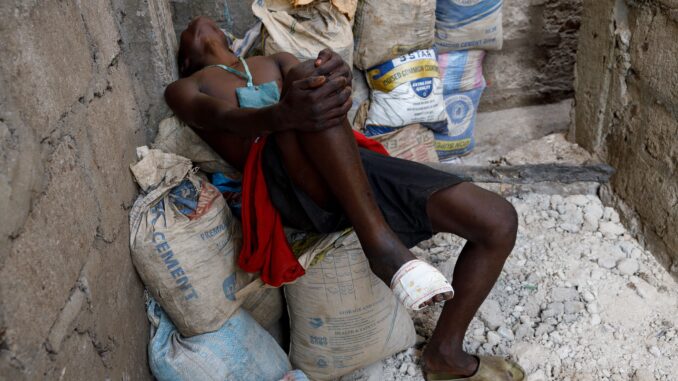
The sight of young men and women wandering aimlessly through the streets, barely conscious, physically deteriorating and seemingly disconnected from reality, is one of the most heartbreaking images of the country’s crisis. Some lie motionless on pavements. Some appear unable to recognise where they are. Some bear wounds, infections and injuries. Some have lost their ability to function normally. Others disappear from their families, their communities and society. They are not simply drug users. They are sons and daughters. They are brothers and sisters. They are somebody’s child.
They are young people whose lives should have been filled with possibility, whose energy should have been directed towards building careers, raising families, creating businesses, contributing to society and helping their country grow. Instead, too many are becoming victims of addiction, despair and a devastating loss of human potential.
It is easy to look at them and condemn them. It is easy to dismiss them as irresponsible, lazy or lost causes. But that would be to look at the symptoms while ignoring the disease.
What happens to a young person who grows up with little hope of employment? What happens when education offers no guarantee of a decent livelihood? What happens when poverty becomes a permanent condition, when opportunities are scarce, when frustration becomes unbearable and when the future appears to offer nothing but disappointment?
Not every young person who experiences poverty or unemployment turns to drugs. But when hopelessness, unemployment, social exclusion, trauma and the availability of dangerous substances collide, the consequences can be catastrophic.
Kush is not merely a drug problem. It is a public health emergency. It is a social crisis. It is a national alarm. And it is a warning that a generation is being lost before its potential has been realised.
A drug crisis: A generation being buried alive
The spread of Kush should be treated as one of Sierra Leone’s most urgent national emergencies. A country cannot afford to watch its young population become incapacitated by addiction and then pretend that the problem can be solved by arresting a few individuals, removing people from the streets or issuing occasional public statements.
Drug addiction is not simply a policing problem. It is a healthcare problem. It is a mental health problem. It is an unemployment problem. It is a social protection problem. It is a problem of prevention, treatment, rehabilitation and reintegration.
Where are the rehabilitation facilities? Where are the treatment centres equipped to help people recover from severe addiction? Where are the trained mental health professionals? Where are the outreach programmes that can identify vulnerable young people before they become deeply addicted?
Where are the long-term recovery programmes that help people rebuild their lives, find employment and reconnect with their families? And where is the national urgency?
A young person suffering from addiction should not be abandoned to the streets, treated as a nuisance or left to die in silence. They need treatment. They need compassion. They need rehabilitation. They need an opportunity to recover. And their families need support. A society that abandons its most vulnerable people is slowly abandoning its own future.
How did we get here?
Sierra Leone’s decline cannot be attributed to a single government, a single event or a single mistake. Its history is shaped by a complex combination of colonial legacies, political instability, corruption, economic mismanagement, weak institutions, civil conflict, poverty, unemployment and repeated failures to translate natural resource wealth into broad-based development.
The brutal civil war left wounds that were not simply physical. It destroyed communities, disrupted education, weakened institutions, shattered livelihoods and inflicted profound psychological trauma.
The country has made significant efforts to rebuild since the war. Yet rebuilding physical infrastructure is not the same as rebuilding a society. A nation can reconstruct roads and buildings while its people remain trapped in poverty. It can conduct elections while public institutions struggle to deliver basic services. It can export minerals while its citizens lack economic security. It can celebrate national independence while young people feel that independence has failed to deliver the freedom to live a dignified life.
The fundamental problem is not merely a lack of resources. It is the failure to create a system in which resources, opportunities and national wealth are converted into tangible improvements in people’s lives.
Corruption, where it exists, steals more than money. It steals classrooms, hospitals, medicines, roads, jobs, opportunities and futures. Poor governance does not merely weaken the state. It weakens the hope of its citizens.
And when citizens lose faith in their institutions, when they believe that hard work offers little reward and that the future is determined by connections (connectocracy) rather than competence, the foundations of national progress begin to crumble.
A country that cannot afford to lose its young people
Sierra Leone has one of its greatest assets in its youthful population. Young people should be the engine of economic transformation. They should be the innovators, entrepreneurs, farmers, teachers, scientists, healthcare professionals, artists and leaders who carry the country forward.
But a youthful population is only an advantage when it is educated, healthy, productive and empowered. Otherwise, it becomes a generation burdened by unemployment, frustration, poverty and social instability.
What is the purpose of political leadership if the most vulnerable citizens are left to wander the streets intoxicated, abandoned and dying? These are not questions of political rhetoric. They are questions of national survival.
The responsibility of leadership and the responsibility of society
Sierra Leone cannot afford another generation of excuses. It cannot afford leaders who see public office as an opportunity for personal enrichment rather than public service. It cannot afford political divisions that consume energy while the country struggles with poverty, addiction, unemployment and deteriorating social conditions. It cannot afford to treat the drug crisis as a passing inconvenience.
The fight against Kush requires a comprehensive national response involving government, healthcare professionals, communities, families, schools, religious institutions, civil society, law enforcement and international partners.
Drug trafficking networks must be investigated and dismantled. Those responsible for importing, manufacturing, distributing and profiting from dangerous substances must face the law. But those suffering from addiction must be treated as human beings deserving medical care, dignity and a chance to recover.
The country must invest in prevention, rehabilitation, mental healthcare, education, skills development, employment and economic opportunities. It must create an environment in which young people have something to look for, something to aspire to, something to believe in.
Above all, it must restore hope. Because when hope disappears, despair finds fertile ground. And when despair becomes widespread, a nation begins to lose more than its economic prospects. It begins to lose its soul.
From the Lion Mountains to the valley of despair
Sierra Leone means Lion Mountains. The lion is a symbol of strength, courage, dignity and power. But what has become of the roar? How did the Lion Mountains become a place where so many young people struggle to find their footing? How did a nation once celebrated for educational achievement and pioneering institutions became a country where so many of its citizens are struggling to survive?
How did the Athens of West Africa become a nation confronting the heartbreaking sight of young people wandering its streets in the grip of addiction? How did a country once described as the Jewel of Africa become a nation whose greatest treasure, its people, is increasingly threatened by poverty, drugs, unemployment and despair?
These questions should haunt every Sierra Leonean who cares about the future of the country. They should haunt its political leaders. They should haunt its institutions. They should haunt every person who has the power to make a difference. Because Sierra Leone’s greatest wealth was never its diamonds. It was never its gold. It was never its iron ore. Its greatest wealth was always its people.
And when a nation begins to lose its people, when young men and women begin to lose their lives, their health, their dignity and their hope – it is experiencing a tragedy far more greater than the depletion of any mineral resource. It is experiencing the depletion of its future.
The Lion Must Roar Again – Before Its Future is Buried
Sierra Leone is not destined to remain poor. It is not destined to be a graveyard of wasted potential. It is not destined to watch generation after generation disappear into the misery of addiction, unemployment and hopelessness.
But destiny will not change by itself. The Lion cannot roar again through slogans, political promises, patriotic speeches or the endless repetition of what Sierra Leone once was. The past is a source of pride, but it cannot feed the hungry. The history of Fourah Bay College cannot rehabilitate a young man dying from Kush. The diamonds beneath the earth cannot rescue a mother watching her son slowly destroying himself.
The country’s rich mineral deposits cannot create jobs unless wealth is managed responsibly, invested wisely and used to improve the lives of ordinary people. And independence, however glorious its history, means little to a young person who feels imprisoned by poverty in the very country that is supposed to be his home.
Sierra Leone needs more than another political promise. It needs a national awakening. It needs leadership with integrity, institutions that work, accountability that is real, education that leads to opportunity, healthcare that reaches the vulnerable, and an economy that gives its young people a reason to stay.
It needs a war against Kush that is fought not merely with arrests, but with rehabilitation, prevention, compassion, treatment and the dismantling the criminal networks that profit from human misery.
It needs to rescue the young people lying on its streets, not because they are politically useful, not because their suffering makes headlines, but because they are human beings whose lives still matter.
And perhaps the most painful question of all is this: What is the value of a nation rich in diamonds, gold, rutile, iron ore and natural beauty, if it cannot save the lives of the young people who are its greatest treasure?
We cannot continue to mourn Sierra Leone’s past greatness while doing nothing to reclaim its future. We cannot continue to romanticise the Athens of West Africa while watching its children dying in despair. We cannot continue to call it the Jewel of Africa while its most precious jewels, its young people, are being lost to addiction, poverty and neglect.
The time has come to stop asking only how Sierra Leone fell. The time has come to ask whether we have the courage, the conscience and the determination to lift it back up. Because the Lion Mountains are still there. The diamonds are still beneath the earth. The talent is still within its people. The potential is still alive.
But a nation cannot live on memories, and a lion cannot survive forever without a roar. Sierra Leone must rise – not for the glory of its politicians, not for the wealth of a privilege few, not for the applause of the world – but for the young people who are dying on the streets, for the families who have lost hope, and the generation yet unborn who deserve something better than the inheritance of poverty, addiction and broken promises.
Let the Lion Mountains roar again. Let the Jewel of Africa shine again. Let Sierra Leone reclaim its dignity, its purpose and its future. And let us begin before there is nothing left to save.
Be the first to comment